
Skimmed Milk: Nutrition Facts and Health Benefits
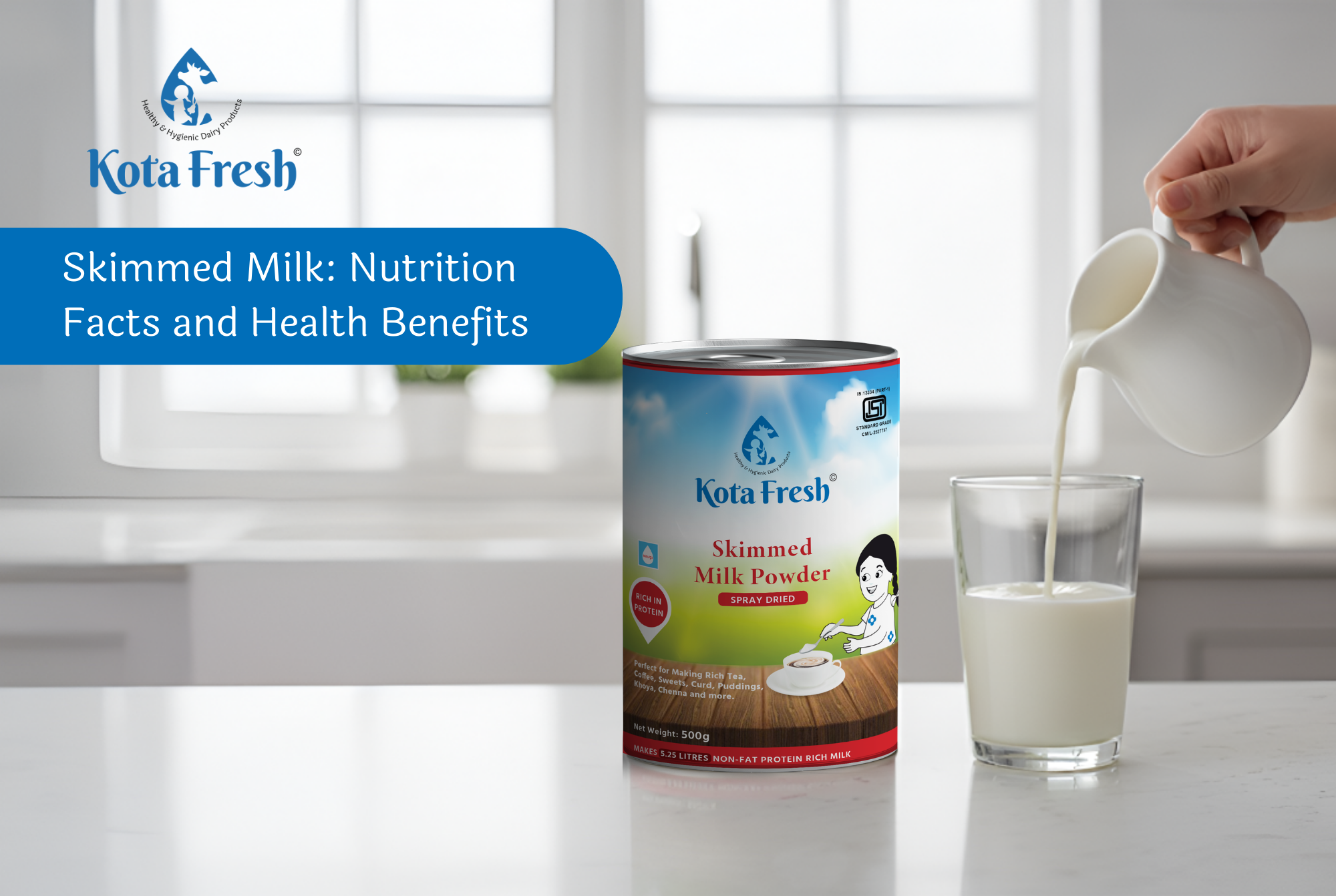
India is the world's largest milk producer, with an output of 239.30 million tonnes in the year 2023-2024. While it is projected to reach 250 million metric tonnes in 2026, there’s growing demand for a dairy category: skim milk.
Currently, 7 out of 10 Indians consume thick or full-fat, creamy milk. The remaining are the health-conscious ones who need a lighter version of the regular milk. However, lighter doesn’t mean diluting it with water. And that’s where the major confusion lies.
The FSSAI data shows that 41% of milk samples fail quality parameters, due to low Solids-Not-Fat (SNF) or dilution with water. This makes milk look thin, but it also reduces the concentration of protein, calcium, and other nutrients.
So, what’s the solution? Switching to skimmed milk. Unlike simple dilution, this category scientifically removes fat from whole milk while preserving all the nutrients. Consumers in tier 1 and 2 cities are moving away from high-calorie milk to skim milk. Let’s read more about skimmed milk benefits and how it is processed.
What is Skimmed Milk?
Skimmed milk is cow’s milk with almost all the milk fat removed. It is also called fat-free milk or non-fat milk. In India, most of us grow up drinking cow's milk with a rich, creamy layer on top. Skimmed milk is the version of that milk where the cream has been "skimmed" off.
While whole milk contains about 3.5% fat, skimmed milk must contain less than 0.5% fat to meet FSSAI standards. Many people assume it is "watered down," but that is not true. When you add water to milk at home, you dilute its taste, protein, and calcium.
However, professionally processed skimmed milk removes only the fat. This leaves you with a drink that is thin in texture but still healthy in nutrients like protein and calcium.
How is Skimmed Milk Processed?
Unlike adding water at the Kota Fresh dairy plant, we follow a hygienic, systematic process under a controlled environment to prepare skimmed milk. Here’s a detailed breakdown:
Collection and Testing: The process begins at the farm. Raw milk is collected and immediately chilled to below 4°C to prevent bacterial growth. Once it reaches the dairy plant, it undergoes testing. Our experts check for purity, fat content, and ensure there is no added water or adulterants. Only the highest quality milk is accepted for skimming.
Centrifugal Separation: Fresh milk is placed in a high-speed spinning machine called a centrifuge. Because fat is lighter than the rest of the milk, the spinning force pulls the heavy, nutrient-rich skimmed milk to the outside while the cream stays in the middle. The cream is removed, leaving behind milk with less than 0.5% fat.
Pasteurisation: The skimmed milk is heated quickly to kill any harmful germs. This step is important to maintain product quality and safety. It’s done carefully so the proteins don’t lose their strength.
Evaporation: In order to meet the skimmed milk supply in Kota, we provide it in powder form. For the milk to become powder, it needs to thicken. In this step, the milk enters an evaporator where about 80% of the water is removed under a vacuum. This turns the milk into a concentrated, syrupy liquid while protecting the vitamins from high heat.
Spray Drying: This is where the liquid turns into powder. The concentrated milk is sprayed into a vast chamber of hot air as a fine mist. The remaining water evaporates instantly in mid-air, and the milk solids fall to the bottom as tiny, dry particles.
Cooling and Packing: The fine powder is quickly cooled to prevent clumping, then packed into airtight packs. This ensures a long shelf life without the need for artificial preservatives.
What are the Health Benefits of Skimmed Milk?
Apart from giving extra calories, the following are a few skimmed milk benefits:
Weight Management: The most significant advantage is the calorie count. A glass of whole buffalo milk can have up to 160 calories, while skimmed milk has only about 80 to 90 calories. For an Indian adult trying to lose weight or maintain a lean physique, this simple switch can save thousands of calories every month.
High-Quality Lean Protein: Skimmed milk is a complete protein source. It contains all the essential amino acids your body needs to build and repair muscles. Since there is no fat to slow down digestion, the protein is absorbed efficiently.
Heart-Healthy Choice: By removing saturated fats and cholesterol, skimmed milk helps protect your heart. It allows you to enjoy the benefits of dairy without worrying about arterial plaque or rising LDL (bad cholesterol) levels.
Stronger Bones and Teeth: There is a common myth that removing fat reduces calcium intake. In fact, skimmed milk has slightly more calcium by weight because the milk solids are more concentrated. A single glass provides about 300mg of calcium, which is essential for preventing bone density loss as we age.
Blood Sugar Control: Since it has a lower fat content, skimmed milk is a safer option for those managing their blood sugar. It provides steady energy without the heavy, sluggish feeling.
Did You Know?
Skimmed milk hydrates the body better than water because its electrolytes help retain fluid in your system longer.
It produces stiffer, longer-lasting foam in coffee because there is no fat to weigh down the protein bubbles.
One glass of skim milk provides over 35% of your daily Vitamin B12, essential for nerve health and red blood cells.
The fat is removed through physical spinning (centrifugation), meaning no chemicals are used in the process.
It naturally contains both Whey and Casein proteins, making it an ideal post-workout drink.
Nutritional Difference between Whole Milk and Skim Milk
The following are whole and skim milk nutrition facts:
| Nutrient | Whole Milk | Skimmed Milk |
|---|---|---|
| Calories | 150 – 160 kcal | 80 – 90 kcal |
| Total Fat | 8.0g – 9.0g | < 0.5g |
| Saturated Fat | 5.0g | 0.1g |
| Protein | 8.0g | 8.5g – 9.0g |
| Calcium | 280mg | 300mg – 310mg |
| Cholesterol | 24mg | < 5mg |
| Vitamin B12 | 1.1mcg | 1.2mcg |
Conclusion: Skimmed milk has more protein and fewer calories as the milk solids are in concentrated form.
What are the Uses of Skimmed Milk Powder?
Skimmed milk powder can easily fit into the Indian diet. It can be used for:
Daily tea and coffee
Milk for kids (hot or cold)
Breakfast oats, muesli, and cereals
Smoothies and protein shakes
Homemade curd and lassi
Baking (cakes, cookies, muffins)
Sweets like kheer, rabri, halwa, peda
Gravies and creamy curries (as a lighter milk base)
Paneer-style recipes and milk-based sauces
Emergency milk substitute when fresh milk runs out
Why is Kota Fresh Skimmed Milk Powder Trusted?
Trust in skimmed milk powder comes down to three things: purity, consistency, and compliance. Kota Fresh delivers all three. Our skimmed milk powder is made for everyday Indian use, giving you milk nutrition in a lighter format that fits daily routines without extra fat.
If you want the best dairy products supplier in Kota for quality-focused households and bulk requirements, you can rely on Kota Fresh. It is FSSAI-certified, free of added sugar and preservatives, making it a healthy, nutrient-dense choice for everyday use.
Our skimmed milk powder is available in convenient 500g tins, 1kg packs, and 25kg bulk bags.

